Pinapa (c)



LOCAL NAME:
Pinapa (c)
ENGLISH NAME:
Ritual textile
DESCRIPTION:
Abra, Tinguian, and Itneg: Pinapa
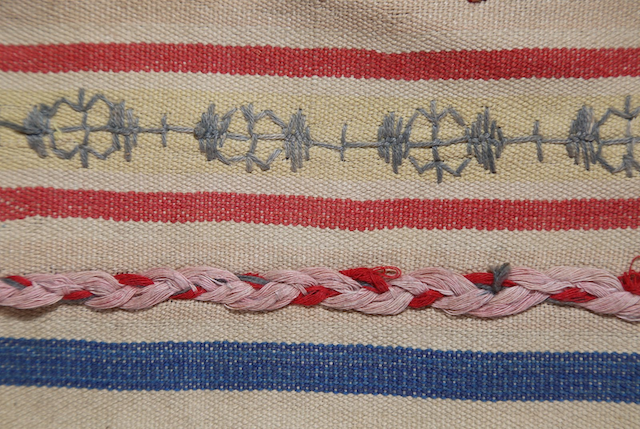
An Itneg ritual textile featuring gray embroidery designs, complemented by bold indigo, red, and yellow stripes. It is adorned with two sets of red and pink braided yarns, with the ends serving as fringe or tassel embellishments. Additionally, the textile is decorated with dangling beads in blue, red, and black, adding a vibrant touch to the design.
COMMONLY USED BY/IN:
Abra, Tinguian, Itneg
MATERIAL COMPOSITION:
Cotton threads, Natural dye, Beads
ITEM CONSTRUCTION:
Plain weave, Embroidery, Beadwork, Dyeing
DIMENSIONS:
Length
132 cm
Width
71 cm
Tassels
8.5 cm
ACQUISITION YEAR:
2021
RESEARCH DATA:
Like most highly regarded textiles in Abra, the pinapa serves special functions and purposes and is known to be exclusively associated with the baknang, or affluent members of the Tinguian or Itneg community (Respicio, 2000). Specifically, this textile is made for a deceased person who was a baknang, making it a symbol of the deceased’s social class or status (Respicio, 2000; Salvador-Amores, 2019). According to Respicio (2000), the pinapa covers the lower limbs of the deceased, positioned for all mourners to see, which Aquino (2005) refers to as the pabalon nga owes (literally meaning "blanket to cover the dead"). Salvador-Amores (2019) adds that the textile may also be laid over the coffin prior to burial. In other cases, more commonly practiced by the Christian Itneg, it is folded in half and placed on top of the coffin (Salvador-Amores, 2019). The use of the pinapa is also believed to offer some form of protection to the deceased in the afterlife (Aquino, 2005). Moreover, the use of the pinapa marks the beginning of complex rituals led by a priestess, during which she invokes spirits into herself, and through her, the spirits command the sacrifice of several pigs (Respicio, 2000).
Regarding its design and structure, the pinapa is typically presented as a blanket or owes. However, in some instances, such as this particular item in the collection, it takes the form of a wrap-around skirt. According to Respicio (2000), the pinapa is a three-paneled, plain-woven textile featuring indigo and magenta stripes, as well as rinamay-ramay or finger-like embroidery motifs. The pinapa in this collection also showcases embroidery patterns reminiscent of traditional kinamayan textiles. Additionally, it is adorned with dangling beads and stitched with red and pink braided yarns along the panels.
REFERENCES: