Pinapa (b)



LOCAL NAME:
Pinapa (b)
ENGLISH NAME:
Ritual textile
DESCRIPTION:
Abra, Tinguian, and Itneg: Binakol (Marurup)
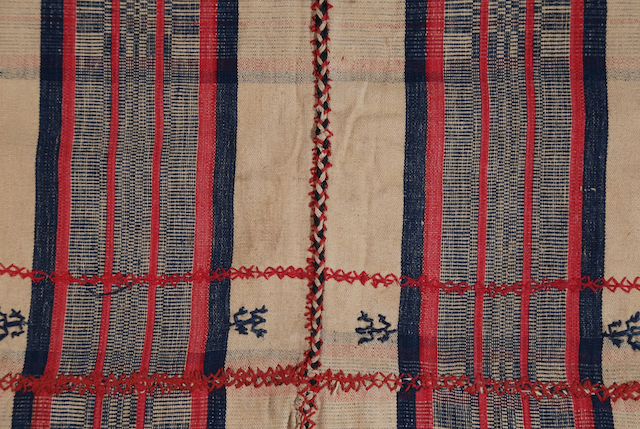
A four-paneled ritual textile featuring a black and red plaid design embedded with binakol weaves. Multiple embroideries and braided thread designs decorate and join the panels of the cloth.
COMMONLY USED BY/IN:
Abra, Tinguian, Itneg
MATERIAL COMPOSITION:
Cotton threads, Natural dye
ITEM CONSTRUCTION:
Double-toned basket weave, Plain weave, Stitching, Embroidery, Dyeing
DIMENSIONS:
Length
120 cm
Width
88 cm
Tassels
4.5 cm
ACQUISITION YEAR:
2021
RESEARCH DATA:
This ritual textile from the collection, called a pinapa, is a cloth made for a deceased baknang to cover their limbs or coffin, offering protection to the deceased in the afterlife (Aquino, 2005). It features a variant of a binakol weave known as the marurup, or the milky way (Respicio & Yoshikawa-Zialcita, 2020). According to Respicio (1994), celestial or cosmic objects serve as guides in Itneg or Tinguian farming and fishing activities; when the Milky Way is visible in the skies, it signals fine weather for fishing and a prospect of a plentiful catch in the rivers (p. 26). The marurup is woven in a special type of plain weave called the double-toned basket weave, in which positive (white) and negative (black) hues of warp and weft are interlocked to create a mesmerizing pattern of graduated rectangles. Emanating from a center, these patterns resemble an optical illusion, appearing to throb when viewed by the observer (Respicio, 2014). Overall, the cloth displays a plaid design in red and black, intersected horizontally and vertically by diamond-like embroideries, with lizard embroideries near the side edges. Its four panels are joined together by stitching and adorned with braided thread designs that extend beyond the side edges, forming its tassel fringes.
REFERENCES: